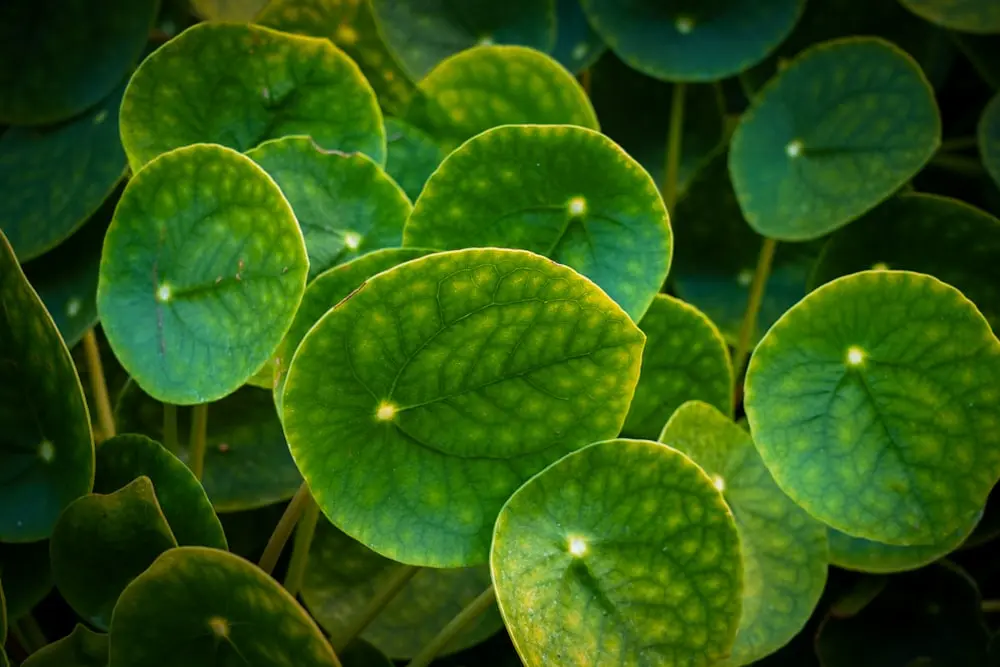
Nature's Secret Algorithm: How Plants Discovered Voronoi Diagrams Before We Did
Nature solved our hardest optimization problems millions of years ago. We just invented names for them last century. What else are we missing?
Your houseplant isn't just sitting there looking photosynthetic. It might be solving one of computational geometry's most elegant problems, and it's been doing it for millions of years without a single GPU.
In May 2026, scientists at Cold Spring Harbor Laboratory made a discovery that should change how we think about the relationship between nature and mathematics. Researchers found that the Chinese money plant—that trendy office desk succulent you see everywhere — has been using Voronoi diagrams all along. Not as a conscious design choice, but as a naturally evolved solution to a problem the plant never knew it was solving.
The Discovery
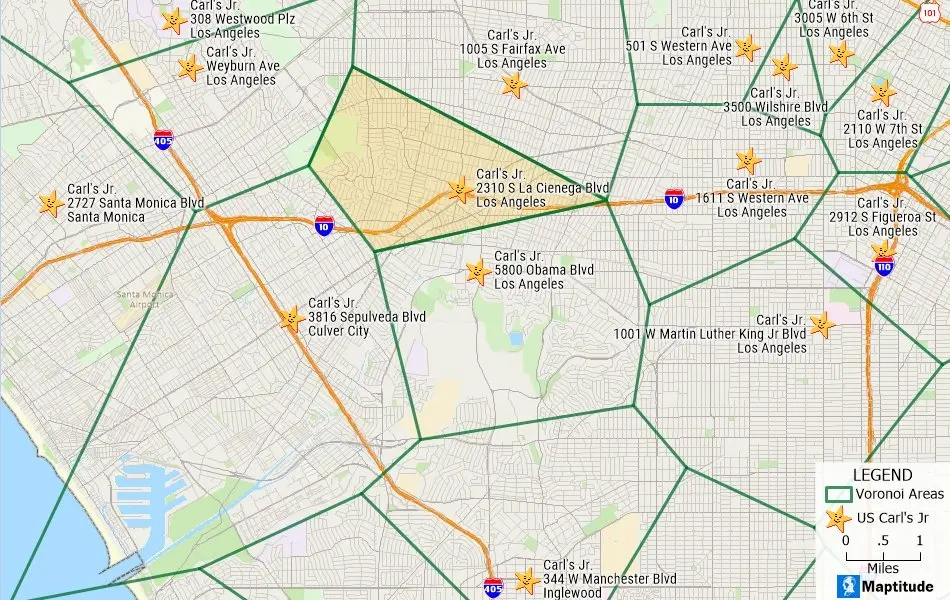
For those unfamiliar with Voronoi diagrams, imagine you're a city planner trying to divide a region into zones. Each zone belongs to the nearest hospital, police station, or water pump. Draw lines equidistant between these points, and you've created a Voronoi diagram. It's a mathematical concept that shows up in urban planning, computer graphics, network design, and biology. Or at least, we thought we understood where it showed up.
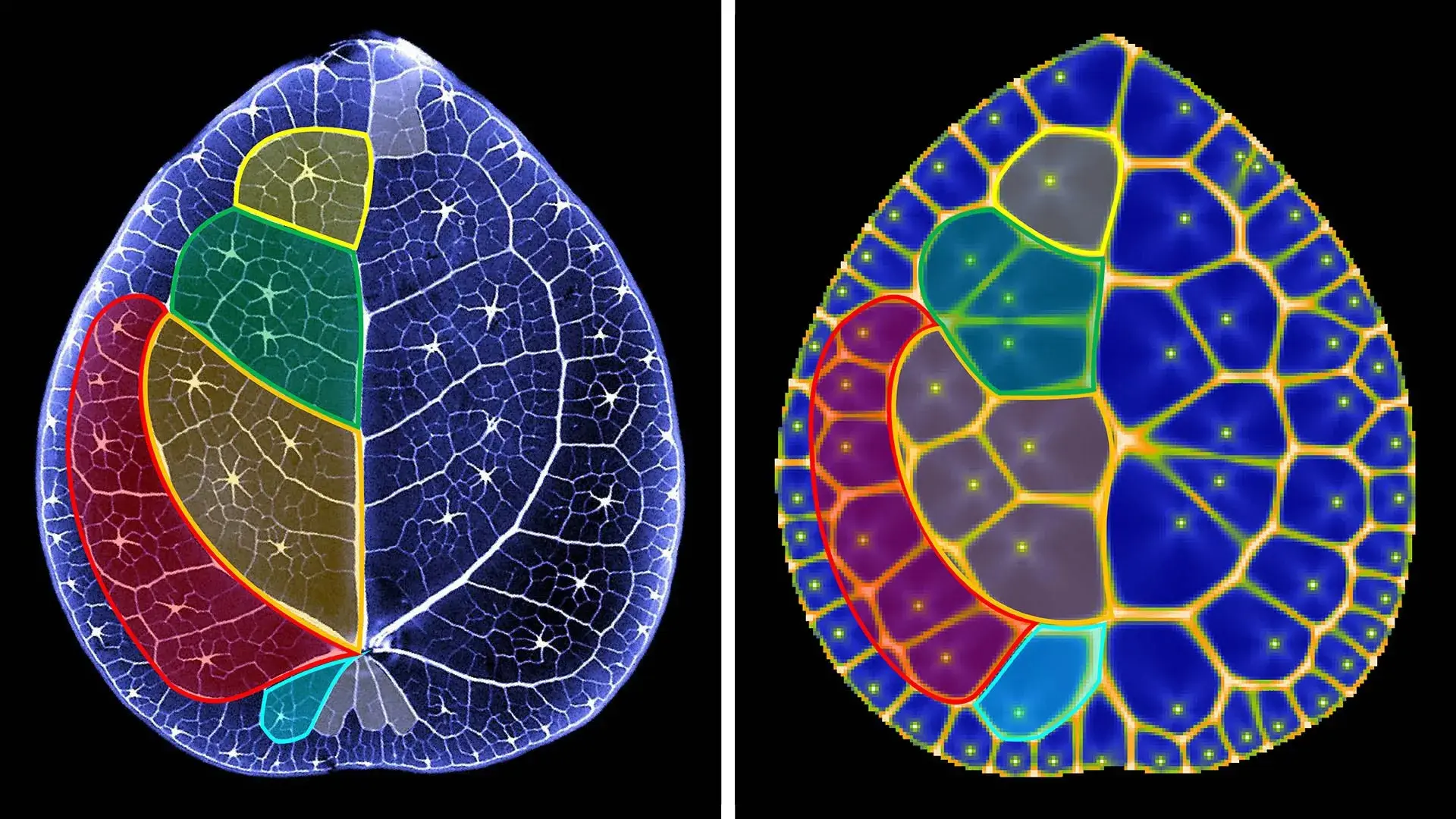
Researchers mapped the structure of Pilea peperomioides — the Chinese money plant—and discovered something remarkable. The plant's leaves contain tiny pores called hydathodes surrounded by looping veins that form an almost perfect Voronoi pattern. The pores sit at the center of each polygon, and the vein system creates the boundaries between zones, as if the plant had used a geometric compass and straightedge to design its own circulatory system.
What makes this even more mind-bending? The plant doesn't measure distances. It has no ruler. It has no calculator. It has no degree in computational geometry. And yet, through purely local biological interactions — nutrients diffusing, cells growing, proteins signaling — it arrived at the same spatial solution that took humans centuries to formalize and prove.
Why This Matters
On the surface, this seems like a fun TED talk factoid. "Whoa, nature does math!" But the implications go deeper.
For decades, biologists have puzzled over why plant leaves develop reticulate vein patterns — looping networks rather than simple branching structures. It seemed inefficient, decorative even. But if these patterns follow Voronoi principles, they're actually solving a real optimization problem: how to deliver water and nutrients to every point on a leaf with minimal transport distance. The plant's vein system essentially creates the most efficient distribution network possible given its constraints.
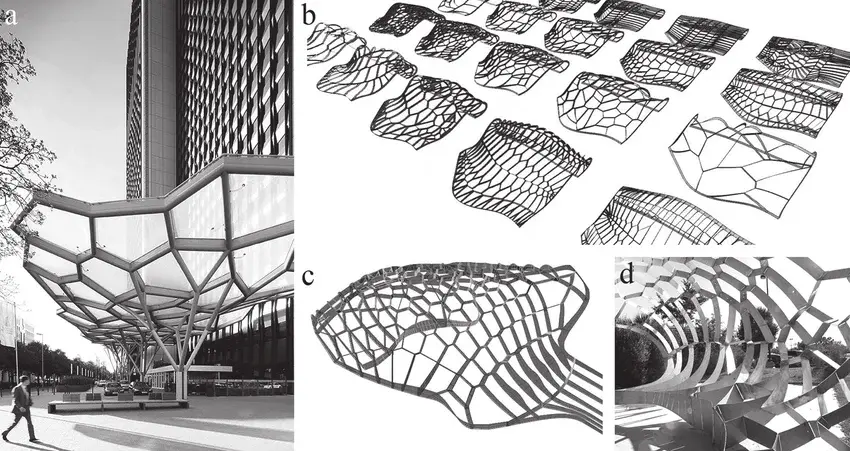
This is the inverse of how engineers typically work. We design systems, test them, optimize them, and then we go into nature and discover nature already figured it out — usually better, and almost always with fewer resources. The Chinese money plant achieved a Voronoi solution through evolutionary pressure, not algorithmic design. No one programmed it. No one drew the blueprint. The math just emerged from simple rules repeated across billions of cells.
For computational biologists and systems designers, this opens a door. If plants solve spatial distribution problems optimally without explicit measurement, what other complex engineering challenges might nature have already cracked? Can we reverse-engineer leaf vein patterns to design better water distribution systems in arid regions? Can we use these principles to optimize network infrastructure or organ-on-a-chip designs?
The Deeper Question
Here's what I find most philosophically interesting: we tend to think of mathematics as something humans invented. We discovered Euclid's theorems, we proved the properties of Voronoi diagrams, we built algorithms to compute them. But the Chinese money plant was computing Voronoi solutions before Euclid was even born.
This suggests something that philosophers and mathematicians have long debated: mathematics might not be invented. It might be discovered. It might be embedded in the fabric of how optimization and efficiency work in any system — biological, physical, or digital.
When a plant develops a Voronoi pattern, it's not applying human mathematics. It's solving the same class of problem that humans eventually formalized. The plant's leaves and a city planner's zoning map are both answering the question: "How do we divide space fairly and efficiently?"
This distinction matters. If mathematics is invented, it's subjective — dependent on the minds thinking about it. But if it's discovered, if it's woven into how complex systems organize themselves, then mathematics becomes more like a fundamental law of nature, as real as gravity.
The Practical Implications
Beyond philosophy, this research has tangible applications.
Researchers like Saket Navlakha at Cold Spring Harbor have already begun exploring how to use these natural patterns to solve human engineering problems. If leaf venation follows Voronoi principles, we might be able to apply the same growth logic to design better biological systems, more efficient water management networks, or even improved microfluidic devices in medical diagnostics.
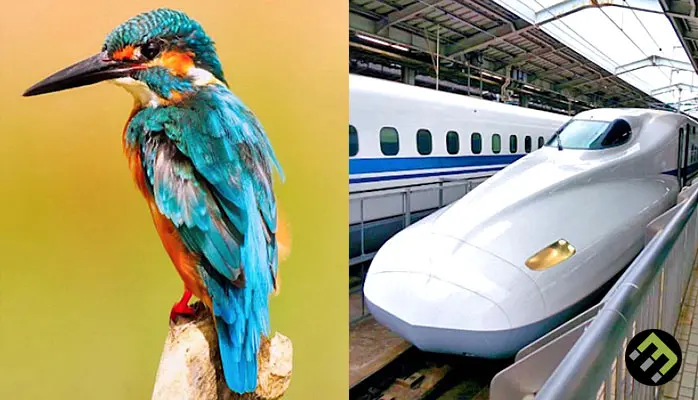
There's already movement in this direction. Biomimicry – the practice of designing human systems based on natural patterns – has given us velcro, bullet trains inspired by kingfisher beaks, and building ventilation systems modeled on termite mounds. The Voronoi discovery in plant leaves is exactly the kind of insight biomimicry needs: a clear mathematical principle that nature has optimized over millions of years.
Imagine water distribution systems in developing regions designed using leaf vein patterns. Imagine organ-on-a-chip devices that mimic the capillary networks of real leaves to perfuse cells more effectively. Imagine network infrastructure that distributes resources as efficiently as a leaf distributes water.
The Humbling Part
There's also something humbling about this discovery. We think of mathematics as one of humanity's greatest intellectual achievements. The formalization of geometry, the invention of algorithms, the proof of theorems – these are the pillars of human knowledge. And they are remarkable.
But a plant, with no brain, no consciousness, no intention to solve mathematical problems, achieved the same result. It did it through the blind process of evolution, optimizing not for mathematical elegance but for survival. The Voronoi diagram wasn't a goal. It was a byproduct of selecting for efficient nutrient distribution.
This is a useful reminder that intelligence and problem-solving aren't uniquely human. They're woven into the basic logic of how complex systems self-organize. A plant doesn't need to understand Voronoi diagrams to use them. A flock of birds doesn't need to understand fluid dynamics to fly efficiently. Nature is full of solutions we're only now beginning to see.
Looking Forward
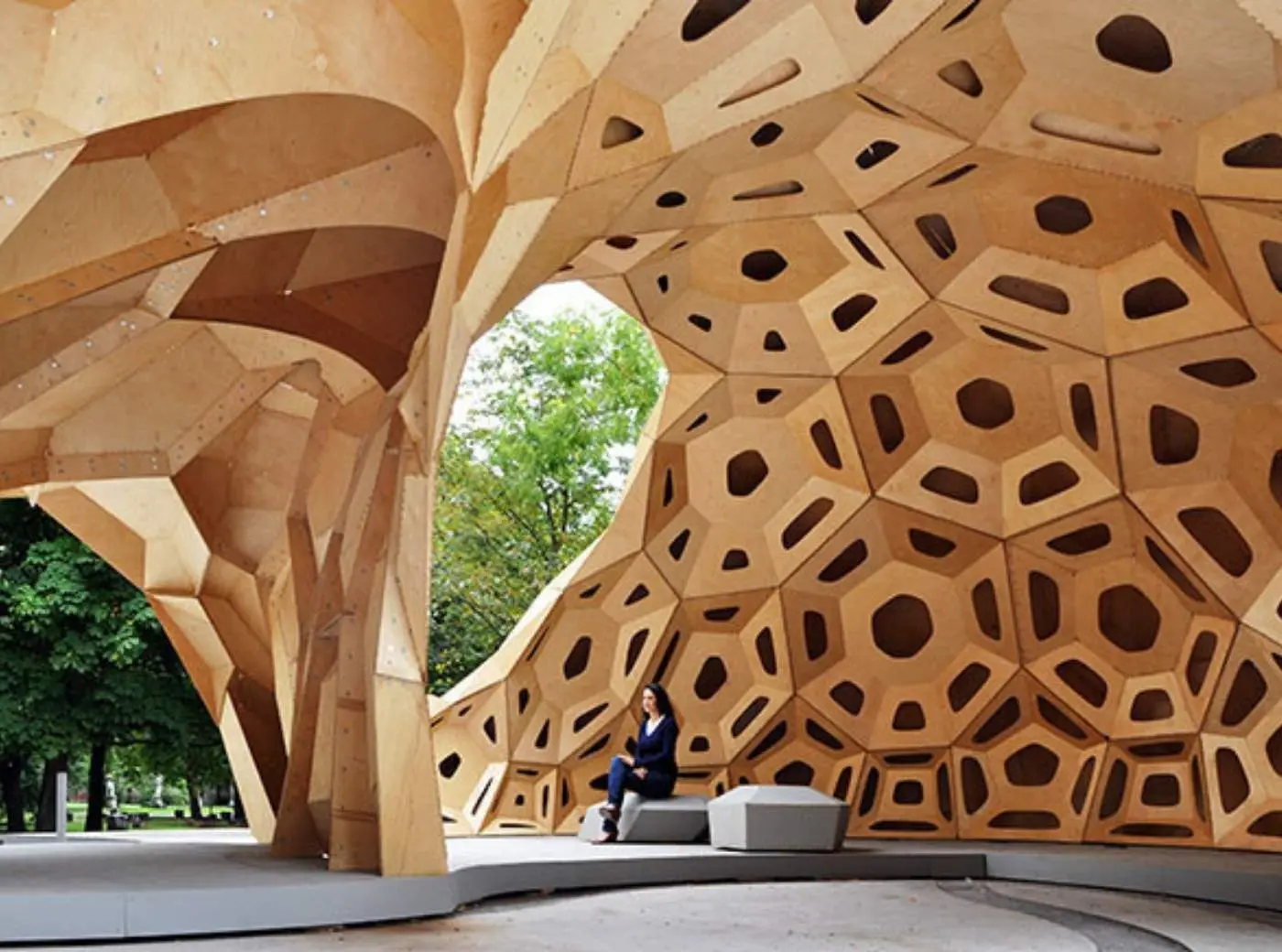
The Chinese money plant's Voronoi pattern is probably not alone. Now that researchers know to look for mathematical patterns in biology, they're likely to find them everywhere. Mycorrhizal networks connecting forest floors, neural pathways in brains, blood vessel networks, insect wings, coral formations — all of these might contain elegant mathematical structures we've previously missed.
The next decade of biology might be less about discovering new species and more about discovering the mathematical principles underlying the ones we already know. And every principle we find will offer a new blueprint for human design.
So next time you're watering your Chinese money plant, take a moment to appreciate what you're looking at. You're not just looking at a houseplant. You're looking at a device that has solved a complex spatial optimization problem more elegantly than most human engineers would. You're looking at millions of years of evolution encoded into the geometry of a leaf.
And maybe that should make us all a little more humble about how much nature still has to teach us.
Sources
- Scientists discover hidden math secret inside Chinese money plant leaves - ScienceDaily
- 'Nature's algorithm' found in Chinese money plants - Cold Spring Harbor Laboratory
- Reticulate leaf venation in Pilea peperomioides is a Voronoi diagram - Nature Communications
- Striking mathematical pattern uncovered in Chinese money plant leaves - Physics World